Robot One is designed to operate as efficiently as possible using electric power. The robot is equipped with rechargeable and hot- swappable batteries, supported by integrated solar panels to extend operating time.
For continuous operation, Robot One can be equipped with a diesel range extender. This turns the system into a hybrid solution, allowing the robot to recharge its batteries during operation and work continuously, enabling true 24/7 field operation.
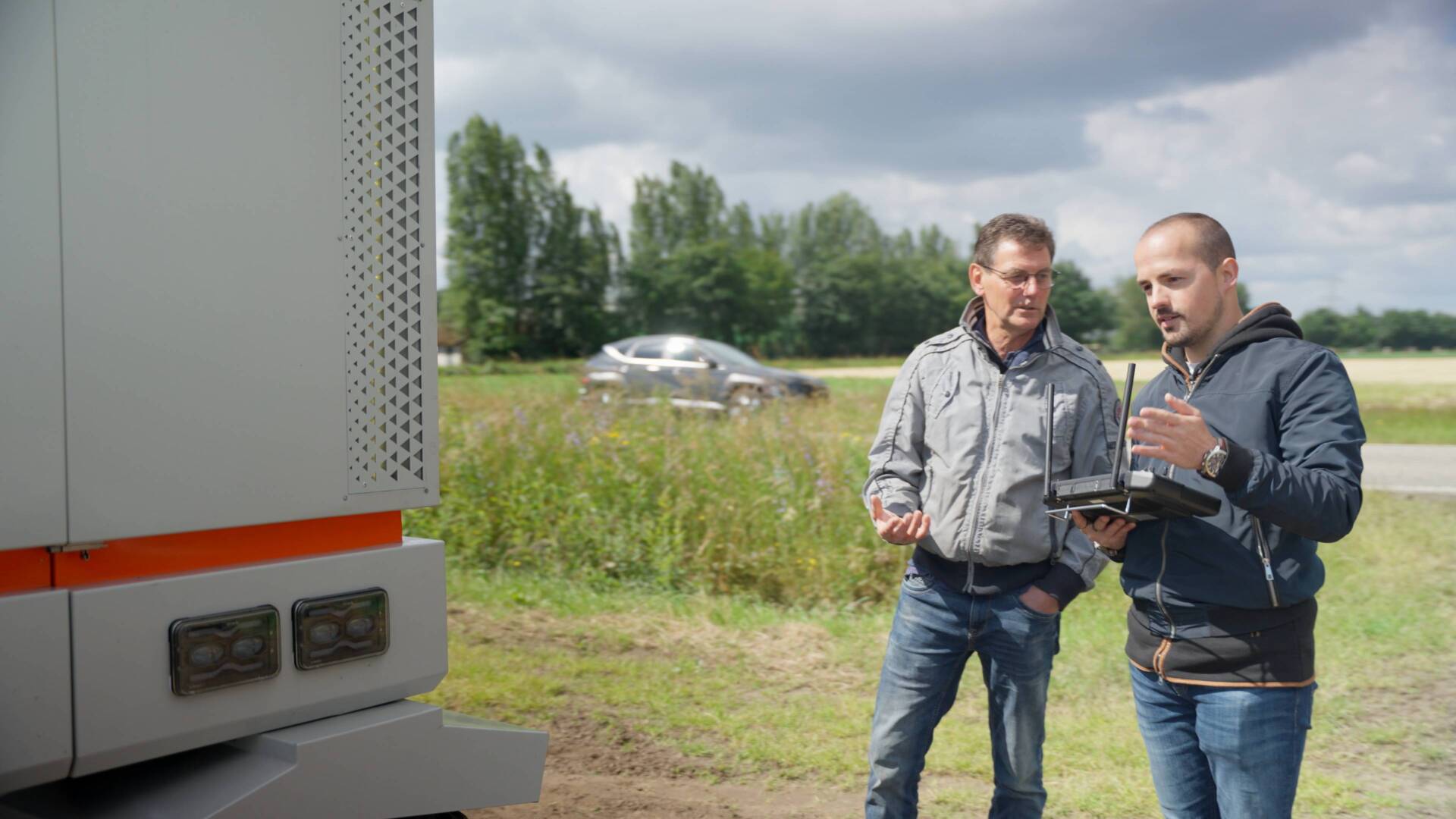
Robot One can operate both autonomously and under remote control. Using a remote controller, the operator can manually drive the robot, configure tasks and parameters, and start autonomous operation once everything is set.
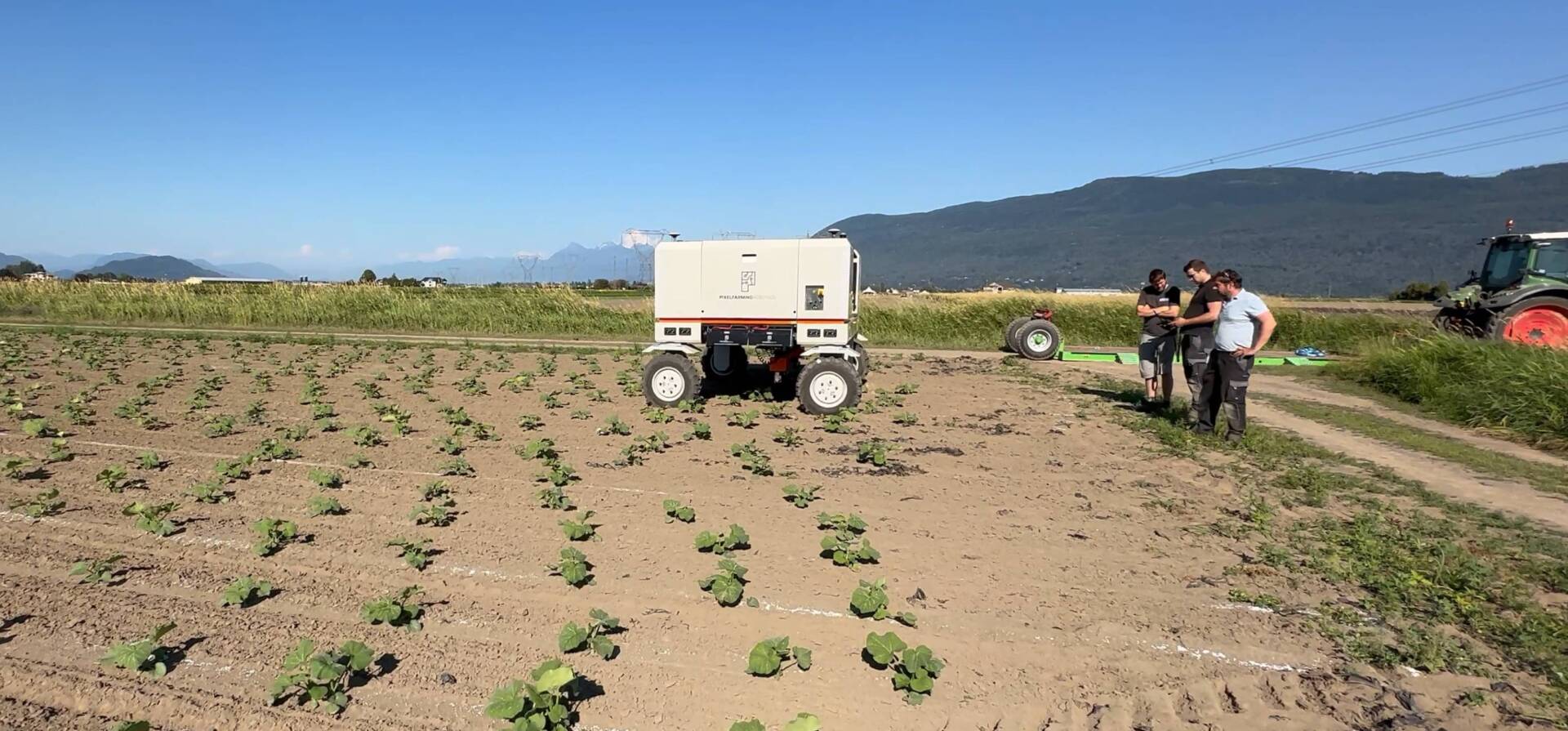
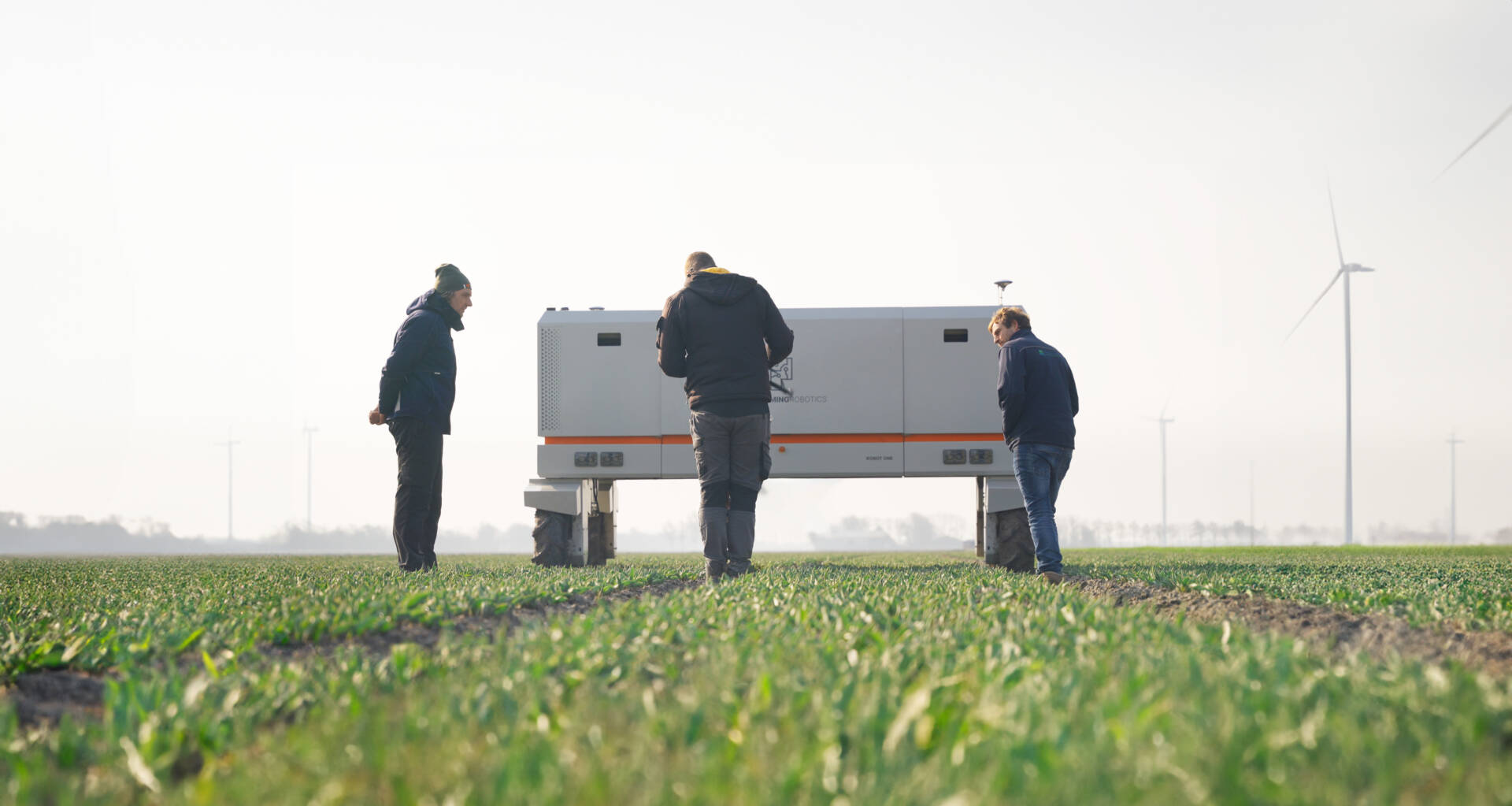
During autonomous operation, Robot One uses GPS combined with RTK for high-precision positioning. Based on this data, the robot maps the field and systematically covers it in a structured pattern, similar to a conventional tractor, but fully autonomously using GPS/RTK guidance.
In addition, a stable 4G or 5G connection is required to operate Robot One. This connectivity enables communication between the robot and the operator interface, supports task setup and monitoring, and ensures reliable autonomous operation in the field.

Robot One is designed for weed control between crops and does not require a fixed inter-row distance. Weed removal is based on plant recognition rather than predefined row spacing, allowing the robot to operate in fields with varying planting patterns.
The system can be adapted to a wide range of crops, including aromatic herbs, lettuce, babyleaf and other leafy greens. It adjusts to different crop layouts and field conditions, making it suitable for various cultivation systems and row configurations.
Robot One can drive at a speed of 150-1.000 meter per hour, and it can shoot approx 10.000 times per laser per hour.
The efficiency is depending on robot configuration, field conditions, weed pressure and method of use.
Based on these parameters, the effective daily capacity is calculated case by case.
For example:
Robot One 300TR with 10 lasers in babyleaf with approx 150 weeds per m2 did run 200m per hour with a result of 90% kill rate.
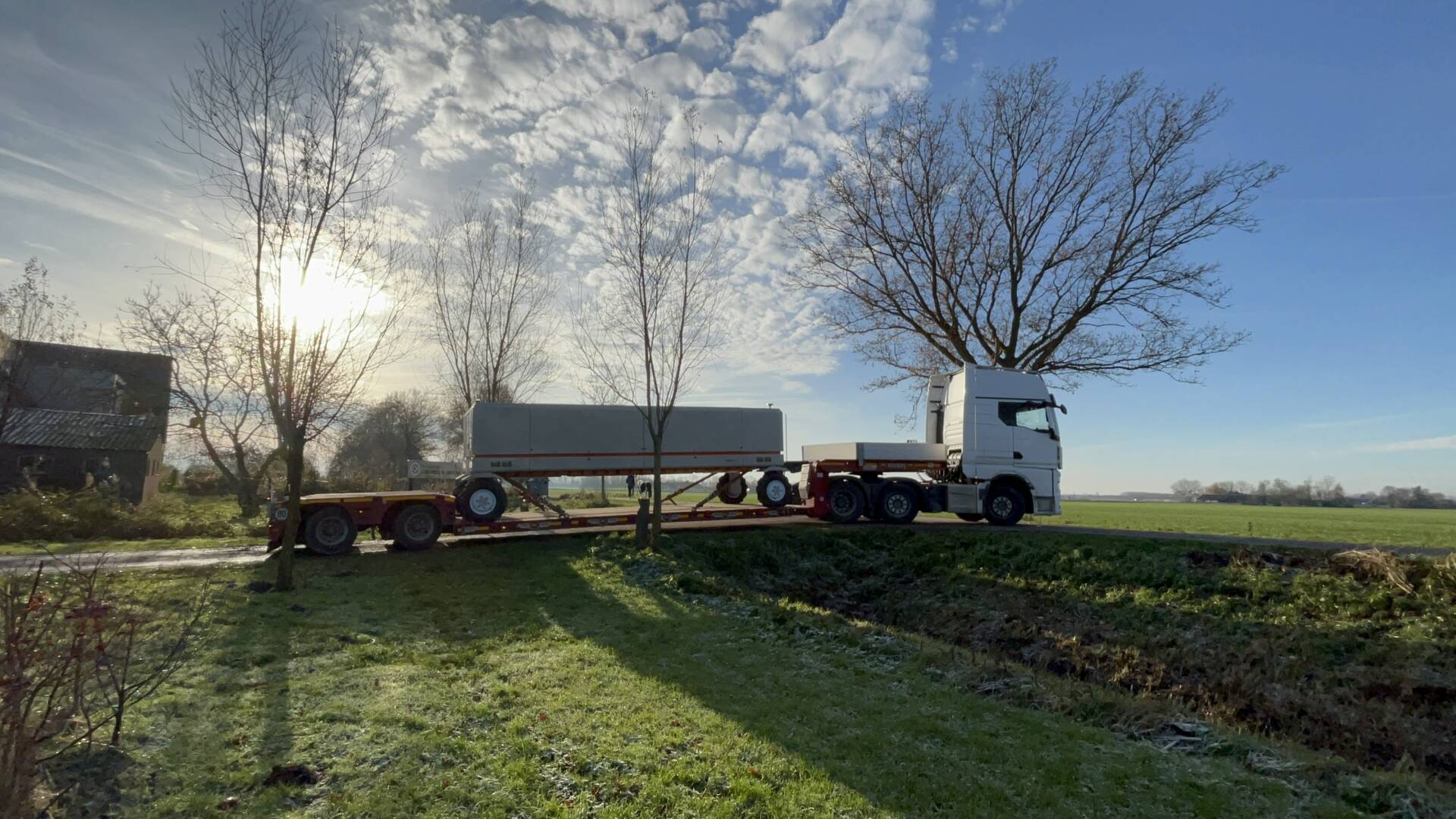
Robot One comes in multiple base sizes, including 3.60 m and 6.20 m. The trackwidth can be adjusted by rotating one or two pairs of wheel units 180°, changing the width by 20 cm per configuration. For example, the 3.60 m version measures:
Exact dimensions may vary depending on tire type or wheel spacers. This flexibility allows Robot One to adapt to different crop row spacings and field conditions.
Please download our brochure for the specs.
When equipped with lasers, Robot One is not designed to target large, overgrown weeds. Burning away a mature plant requires an extreme amount of energy, making the process inefficient. The optimal time for laser weeding is when weeds are in the two-leaf stage and crops have not yet overgrown the rows. Tackling weeds early means faster weed removal, lower energy use, higher precision, and better protection of crop yield.
Robot One combines advanced computer vision with high-powered laser technology to eliminate weeds precisely. It identifies individual weeds in the field, then targets them with a laser that heats plant cells until water molecules inside boil and rupture, killing the plant and stopping photosynthesis. This chemical-free process protects soil health while reducing labor and improving weed management efficiency.
You can download the Robot One brochure through the link below. The brochure provides a detailed overview of the robot, including its features, applications, and technical specifications. This helps you understand how Robot One can fit into your farm operations.